

Foundation drilling professionals know that drilling performance begins and ends with the right tooling setup. When the system is aligned correctly, torque transfers cleanly, vibration drops, equipment lasts longer, and production increases. When the setup is off, everything from the Kelly bar to the rock tools begins to fail.
This guide breaks down how proper tooling configuration improves efficiency, protects your rotary, and extends the life of your drilling rig equipment.
What foundation drilling tools have the biggest impact on torque transfer?
Torque transfer depends heavily on the condition and compatibility of your foundation drilling tools, including rock augers, core barrels, cleanout buckets, and other forms of auger drilling equipment. Each tool interacts with the ground differently, and the wrong tool causes vibration, slippage, and accelerated wear.
RPI partners with Jeffrey Machine to supply high-quality rock augers, core barrels, cleanout buckets, and custom tooling designed for smooth torque transfer and efficient cutting behavior. Choosing tools matched to your formation is one of the strongest ways to stabilize drilling performance.
How does Kelly bar tooling affect drilling stability?
The Kelly bar is the driveline of the drilling system, and its setup determines how much torque reaches your tool. If the Kelly bar is worn, misaligned, or improperly matched to the tool, torque spikes occur and the hole becomes unstable.
RPI repairs, rebuilds, and fabricates all styles of Kelly bars, including friction bars, interlocking bars, telescopic bars, and boring bars. Technicians restore straightness, drive face geometry, and interlock engagement using precision machining that meets or exceeds factory specifications. This work improves alignment, stability, and torque delivery.
Learn more about RPI’s capabilities on the Service and Repair page.
When should you replace a Kelly bar?
Kelly bar replacement is needed when you see any of the following:
- Excessive interlock wear
- Drive face deformation
- Section binding
- Elongated dog bones or friction pads
- Visible deflection
- Cracking near welds
These symptoms reduce torque transfer and create instability at depth. RPI fabricates custom Kelly bars engineered to match your rig’s torque profile, mast height, and drilling conditions. A properly matched bar increases strength, stability, and overall drilling efficiency.
For an overview of the company’s expertise, visit About RPI.
What role do Kelly stub adapters and KDK tools play in performance?
Adapters act as the final connection in the torque path. A worn Kelly stub adapter introduces rotational play that immediately affects drilling stability. KDK tools also require precise fitment to avoid slippage and vibration.
RPI supplies and services Kelly stub adapters, KDK tools, shim boxes, and all related parts needed for a stable drive connection. Technicians match adapters to both new and refurbished Kelly bars to ensure proper engagement and torque control.
How do rock augers, core barrels, and cleanout buckets affect efficiency?
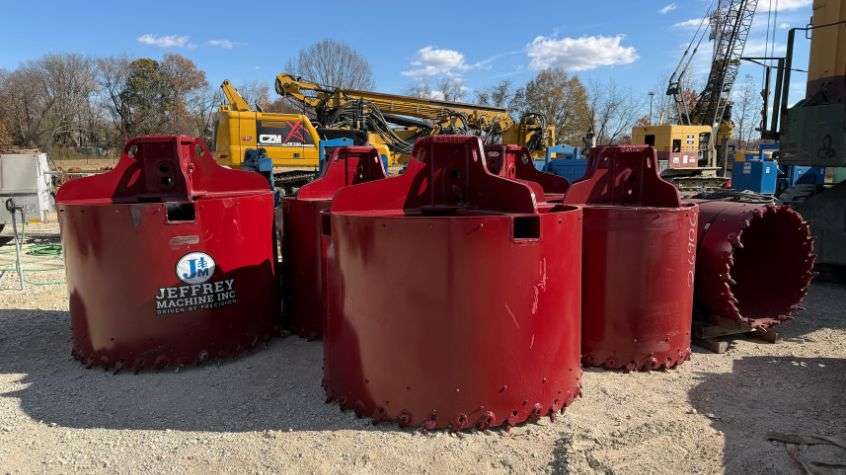
Each of these tools is designed for specific conditions:
- Rock augers cut in fractured or hard formations
- Core barrels handle dense rock where penetration requires cutting rings
- Cleanout buckets remove debris to preserve hole quality
Choosing the wrong tool leads to spiraling wear and energy loss. RPI helps contractors select the right auger drilling equipment for the ground and the rig to ensure clean cutting behavior and maximum torque penetration.
Explore additional support resources on the Resources page.
How does preventive maintenance protect drilling rig equipment?
Preventive maintenance is essential for safe, efficient drilling. OSHA standard 1926.600 requires rigorous inspection of drilling equipment. For drilling rigs, this includes:
- Torque path inspection
- Drive face wear checks
- Interlock and friction pad wear
- Weld integrity verification
- Bearing and pin checks
- Tool alignment checks
Routine inspections prevent catastrophic failures. RPI supports this work with both shop services and mobile field repair to keep rigs running at full performance.
For more guidance, read more about the Importance of Regular Maintenance and Preventative Troubleshooting
How does proper tooling setup increase drilling efficiency and reduce costs?
Proper tooling setup has a direct and measurable impact on drilling efficiency. When the system is aligned correctly, torque transfers cleanly, penetration rates increase, and hole alignment stays accurate. Operators feel less resistance at the rotary, fuel use drops, and the rig stops fighting the vibration and slamming that slow production.
A well-configured drilling system also reduces equipment wear. Clean torque transfer means fewer broken teeth, fewer damaged tools, and less strain on the rotary and Kelly bar assembly. These improvements lower repair costs and keep projects moving on schedule. Torque drum parts and other rotary-path components last longer because they are not absorbing unnecessary shock loads or misalignment forces.
When everything is working in sync, crews spend more time drilling and far less time troubleshooting preventable mechanical issues. That consistency translates into higher production, less downtime, and a drilling operation that runs smoother from start to finish.
Why RPI Delivers Better Drilling Performance
Proper tooling setup is the foundation of efficient, stable drilling. When your Kelly bar, tooling, adapters, and rig components are aligned correctly, torque transfers smoothly, stability improves, and equipment lasts significantly longer. RPI supports contractors with expert repair, precision machining, custom fabrication, and high-quality tooling so your operation can stay productive and profitable.
For support with repairs, custom fabrication, or replacement parts, contact RPI today through the Contact page, or call us at (856) 456-0081.